
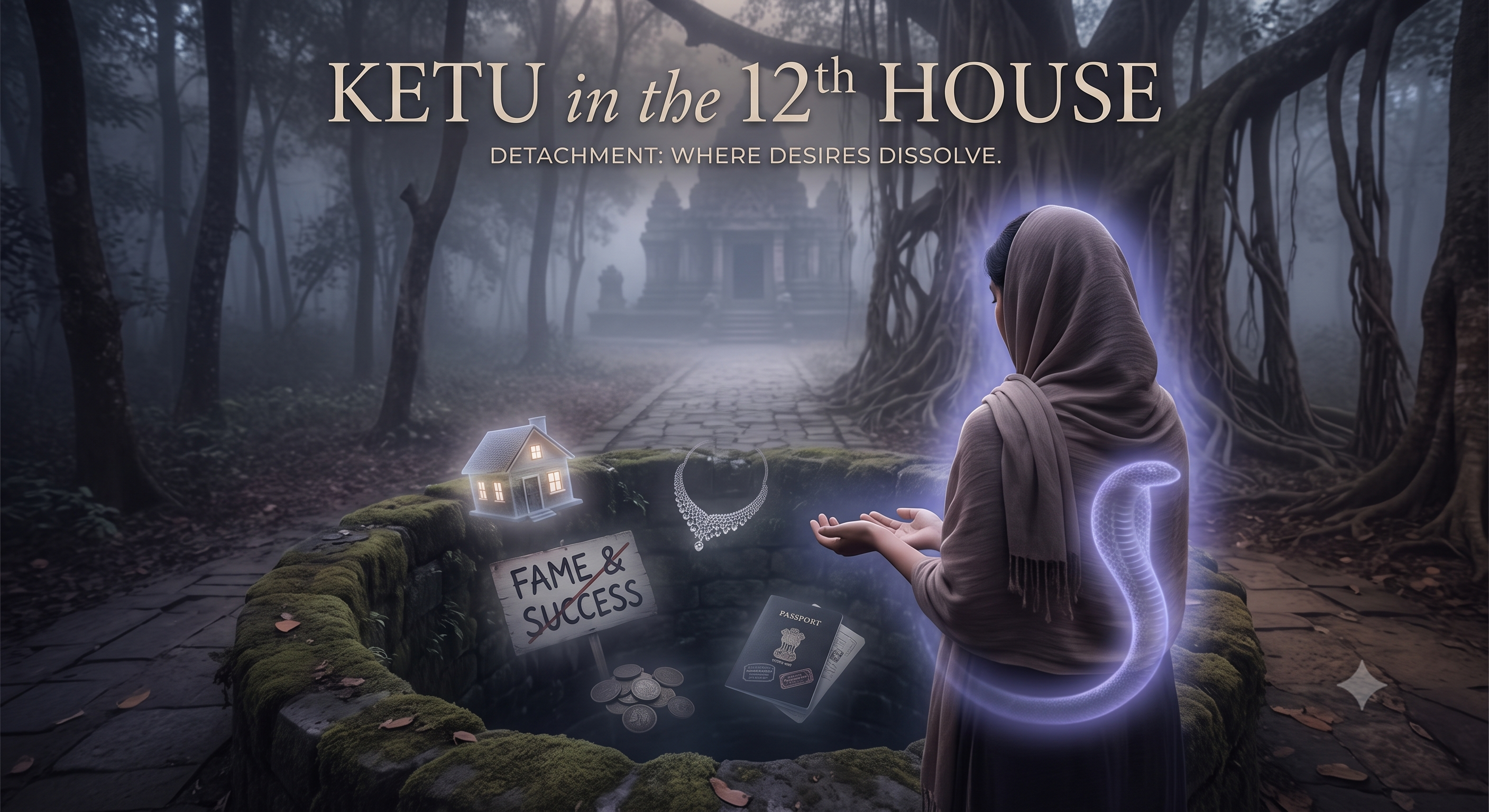

Ketu in the 12th house naturally withdraws. Desire begins fading. Achievement loses importance. Recognition appears unnecessary. The world calls this detachment. The Upanishads remain cautious. They ask one question. Who has become detached? If the ego claims renunciation, renunciation remains incomplete.
This placement often turns inward. Solitude feels effortless. Silence becomes familiar. Outer success loses attraction. The mind concludes liberation has begun. The Upanishads question that conclusion. Walking away proves little. Freedom is not measured by distance. It is measured by the absence of attachment.
The 12th house governs dissolution. Ketu accelerates that process. Old identities weaken. Personal ambitions disappear. Emotional demands become quieter. Yet another danger emerges. The mind mistakes suppression for transcendence. It rejects desire before understanding desire. What remains buried continues existing. Ignored needs rarely disappear. They simply become invisible.
Many with this placement avoid asking. They avoid expecting. They avoid claiming. This appears humble. It also deserves inquiry. Is nothing being desired? Or is desire feared? The Upanishads repeatedly distinguish freedom from avoidance. One arises through knowledge. The other through unconscious resistance.
Spiritual practices often become attractive. Meditation. Solitude. Pilgrimage. Mysticism. Dreams. Ancient wisdom. These experiences deepen perception. They do not guarantee realization. The mind easily collects spiritual experiences. The witness collects nothing. Confusing experience with truth becomes another subtle attachment.
Ketu weakens worldly identity. It does not automatically reveal the Self. The false may dissolve. The real must still be recognized. This distinction remains essential. Emptiness alone is not liberation. Withdrawal alone is not wisdom. Silence alone is not knowledge.
The Upanishads never ask anyone to reject life. They ask them to reject false identification. Relationships may continue. Work may continue. Responsibilities may continue. Attachment alone must end. Renouncing action while preserving ego changes very little. Renouncing ownership changes everything.
The deepest lesson of Ketu in the 12th house is discrimination. Observe whether detachment creates clarity or emotional distance. Examine whether silence reflects wisdom or suppression. The witness never rejects experience. It simply remains untouched by it. When this becomes direct understanding, personal needs are no longer denied. They are simply no longer mistaken for identity. That is the beginning of genuine freedom.

Leave a Reply