
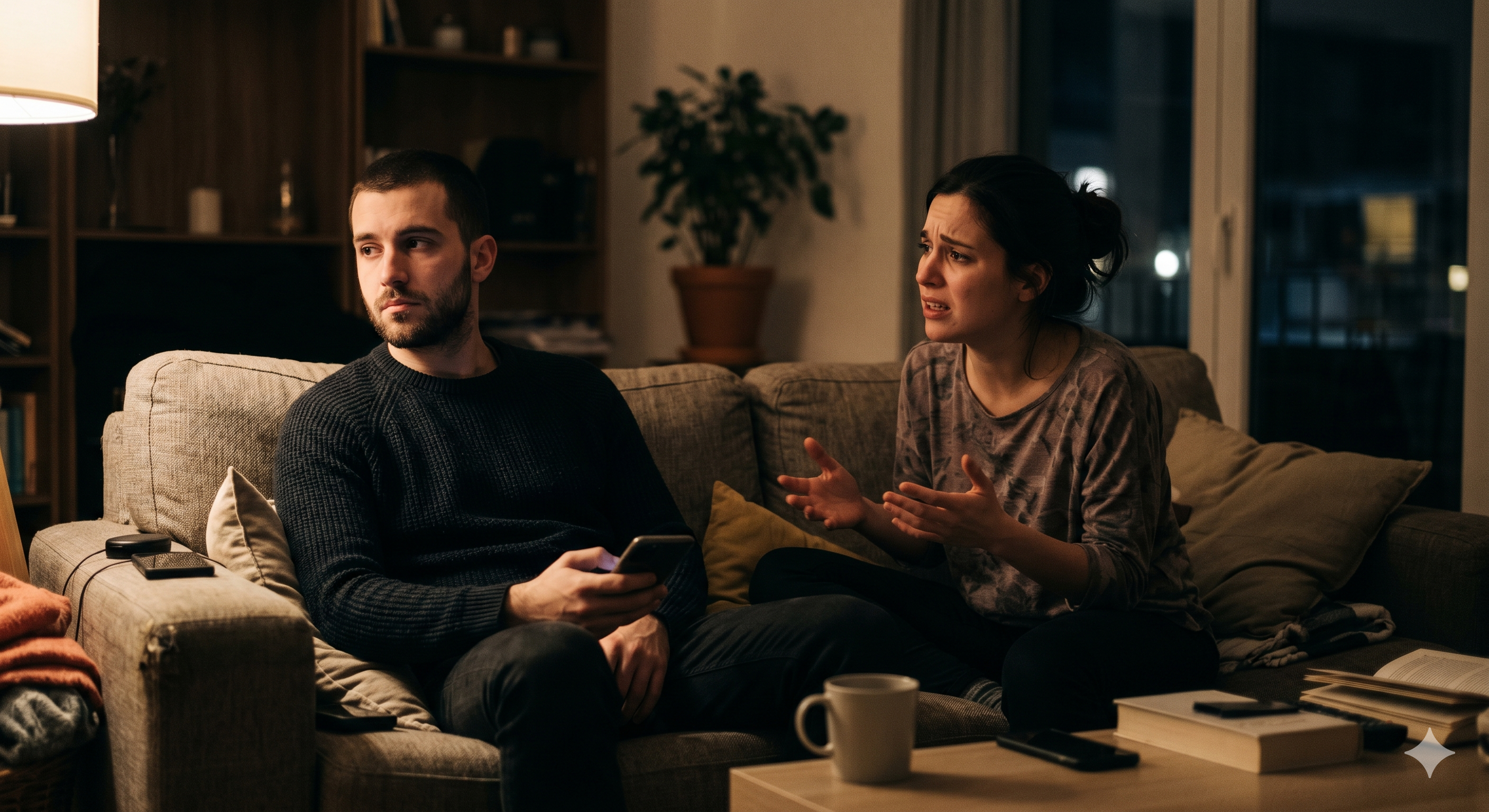

Ketu in the 5th house raises a subtle question – When you step back from your child, is it wisdom or withdrawal? The two often appear identical’. Yet their consequences are very different.
The 5th house concerns children, affection, creation, and emotional participation. It is the realm where a person extends themselves into another life. Ketu moves in the opposite direction. It reduces attachment. It loosens identification. It creates distance from what others naturally hold close.
This does not automatically create problems.
In many ways, it appears mature.
The parent avoids control. Avoids interference. Avoids possessiveness. They allow freedom. They respect individuality. They do not seek ownership over another person’s journey.
Most people would call this healthy.
The Upanishadic view would ask for deeper examination.
What is the source of the detachment?
Wisdom and disengagement can produce similar behavior. Both step back. Both avoid excessive involvement. Both refuse domination. Yet one remains fully present. The other quietly withdraws.
The difference exists inwardly.
Ketu often creates a peculiar relationship with emotional investment. The person cares, yet does not always participate. Observes, yet does not always respond. Remains nearby, yet somehow distant.
Nothing dramatic occurs.
That is precisely why it goes unnoticed.
The child seeks recognition. The response is restrained. The child seeks reassurance. The response is neutral. The child shares excitement. The response remains measured. Over time, the child begins interpreting the pattern.
Perhaps my experiences do not matter.
Perhaps my emotions are unimportant.
Perhaps I am expected to manage everything alone.
The parent may never intend such conclusions.
Intentions are secondary.
Relationships respond to experience.
The sages repeatedly pointed toward a simple truth. Human beings do not suffer only from what is present. They also suffer from what is absent. The absence of attention. The absence of participation. The absence of acknowledgment.
Ketu often operates through absence.
Not active rejection.
Passive distance.
This creates an unusual form of friction between parent and child. Not conflict over authority. Not conflict over expectations. A quieter conflict. The child reaches outward. The parent remains inward. The child seeks emotional engagement. The parent offers freedom instead.
Both believe they are acting appropriately.
Neither understands the other.
The child interprets distance as indifference. The parent interprets distance as respect. The misunderstanding deepens.
This is why emotional detachment can become as influential as emotional control. One restricts through involvement. The other restricts through absence. Both shape development.
The Upanishads distinguish between non-attachment and indifference. Non-attachment means freedom from possession’. It does not mean freedom from care. It does not mean freedom from participation. It does not mean freedom from love.
Many confuse these ideas.
Ketu often reveals the consequences of that confusion.
The parent avoids becoming attached. Gradually they avoid becoming involved. Then involvement feels unnecessary. Finally, emotional distance becomes habitual.
The relationship continues.
Yet something essential remains undeveloped.
Children require freedom.
This is true.
Children also require emotional recognition.
This is equally true.
One nourishes independence.
The other nourishes belonging.
Without belonging, freedom can feel lonely.
Without recognition, independence can feel burdensome.
A child may learn self-reliance under this placement. They may become capable. Adaptable. Internally strong. Yet strength developed through emotional isolation carries its own cost’.
The deeper issue is not whether the parent loves the child’. Love often exists. The issue is whether love becomes visible. Whether care becomes participation. Whether concern becomes engagement.
Life rarely judges intentions.
Life reveals outcomes.
The outcome of excessive detachment is often uncertainty. The child grows up questioning where they stand. Not materially. Emotionally.
Ketu in the 5th house eventually confronts a difficult realization. A child does not require possession. A child does not require constant guidance. A child does not require control.
A child requires presence.
Not overwhelming presence.
Conscious presence.
The willingness to witness. To listen. To acknowledge. To respond.
Nothing more complicated than that.
The wisdom of this placement emerges when freedom and connection coexist. When detachment no longer becomes an excuse for distance. When individuality no longer replaces emotional participation.
Then the relationship changes.
The child remains free.
The parent remains unattached.
Yet neither remains alone.
That is the distinction Ketu must eventually learn. Withdrawal appears peaceful. Presence requires effort. Wisdom chooses presence without possession.
Leave a Reply