
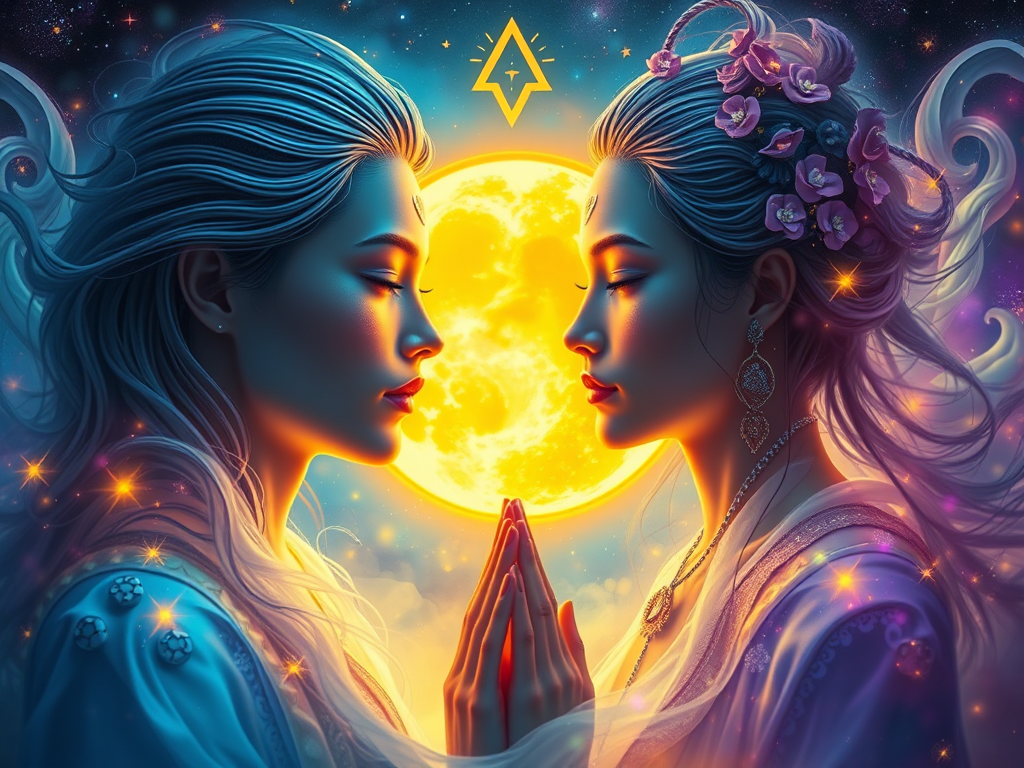
When the Sun and Moon form a significant aspect in a relational chart, something quietly essential emerges—a subtle but persistent pull toward emotional alignment. The Sun represents identity, the outward radiance of self. The Moon, in contrast, rules the inner tides, emotional memory, and instinctive comfort. When these two connect between charts, they create a natural bond—one where who you are and how the other feels begin to intertwine.
But beyond personal compatibility, this aspect can evoke a deeper, often unspoken longing: the desire for the relationship to be embraced by family. Especially when one’s Sun touches another’s Moon, there may be a profound urge for the love between you to not only thrive privately but to be woven into the broader familial context. You may want your partner to not just understand you, but to fit within the home you’ve come from—to be loved by those who shaped you.
In easy aspects, like trines or sextiles, this desire often flows gently. Families may sense the ease, the natural rapport. Your connection feels warm, relatable, familiar. The emotional and expressive languages match, allowing room for mutual support. But when the aspect is tense—such as a square or opposition—there can be friction. One may feel emotionally misread or undervalued, while the other struggles to shine without stepping on sensitive ground. These tensions are often felt not only between partners, but by the families watching from the edges.
House placements add nuance. If the Sun-Moon link falls across the 4th or 10th houses, themes of home, approval, and public identity grow louder. Your love might feel more scrutinized, or more deeply tied to generational expectations.
This Sun-Moon thread is rarely about surface harmony. It reflects a yearning: to build a love that doesn’t just exist beside family, but feels at home within it.
 ©NAVAGRA - A FREE VEDIC HOROSCOPE READING PLACE
Leave a comment