
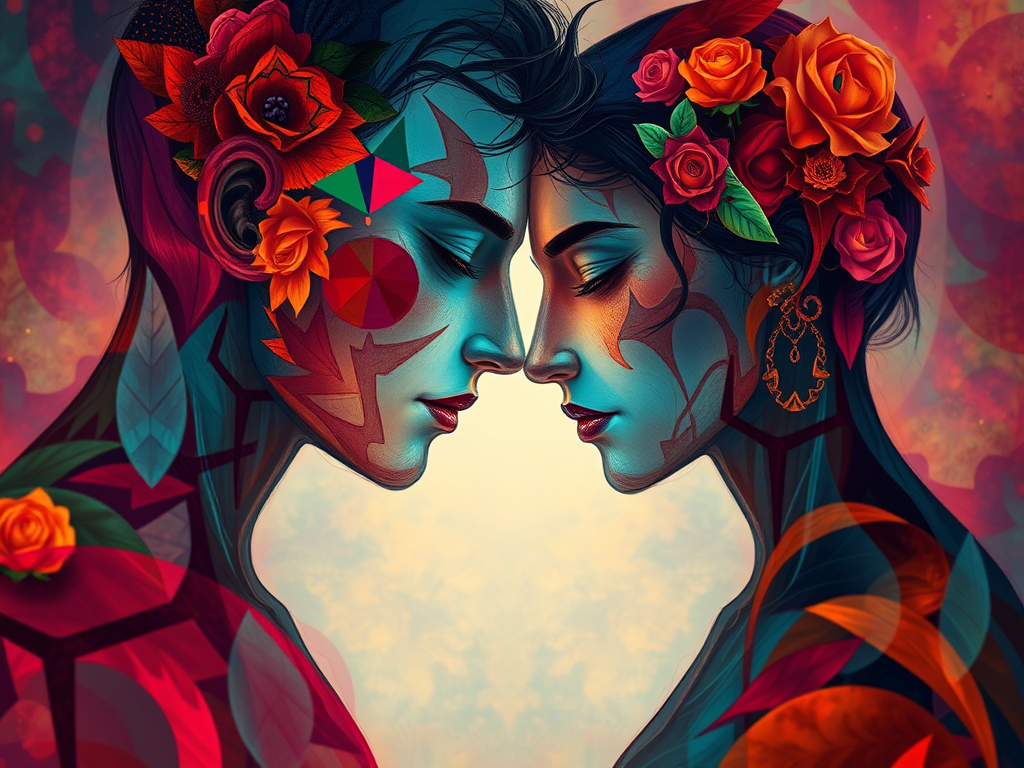
Rahu’s touch on the house of partnership doesn’t seek the aisle—it seeks experience. Not bound by vows or tradition, it leans toward the undefined, the unscripted. There’s an inner pull toward intimacy, but not in the way books describe or elders advise. It’s not rebellion, exactly. It’s exploration. A willingness to walk through love without a map.
Marriage, in this light, feels fixed. Final. Too final. But living together? That offers space. Room to observe love in motion, not sealed by ceremony. There’s curiosity here—about how two lives meet without pressure, how love forms when it’s not forced.
Still, Rahu brings shadows. What begins as freedom may blur into confusion. No rules also means no safety rails. Without structure, feelings can wander. Promises unspoken may remain unmet. What felt liberating may one day feel unstable. There’s no script, and sometimes no answers. This kind of love asks you to trust the journey, not the destination.
Often, Rahu attracts the unusual—the lovers with wild hearts, the bonds that spark fast and burn oddly. These connections challenge and teach, but they rarely follow the rules. They may not settle easily. And that’s both the gift and the ache of it.
So they move in together—not because it’s the next step, but because it’s their step. They don’t call it forever, but they call it real. A shared space becomes a living question, not a conclusion. It’s tender and thrilling and uncertain.
The story begins not with promises, but possibilities. They aren’t sure where it’s headed. But there’s beauty in that too—in writing their own definitions, in testing love’s boundaries gently, together. Even as they wonder: can something undefined still last? They keep going, drawn forward by both love and the mystery it carries.
 ©NAVAGRA - A FREE VEDIC HOROSCOPE READING PLACE
Leave a comment