
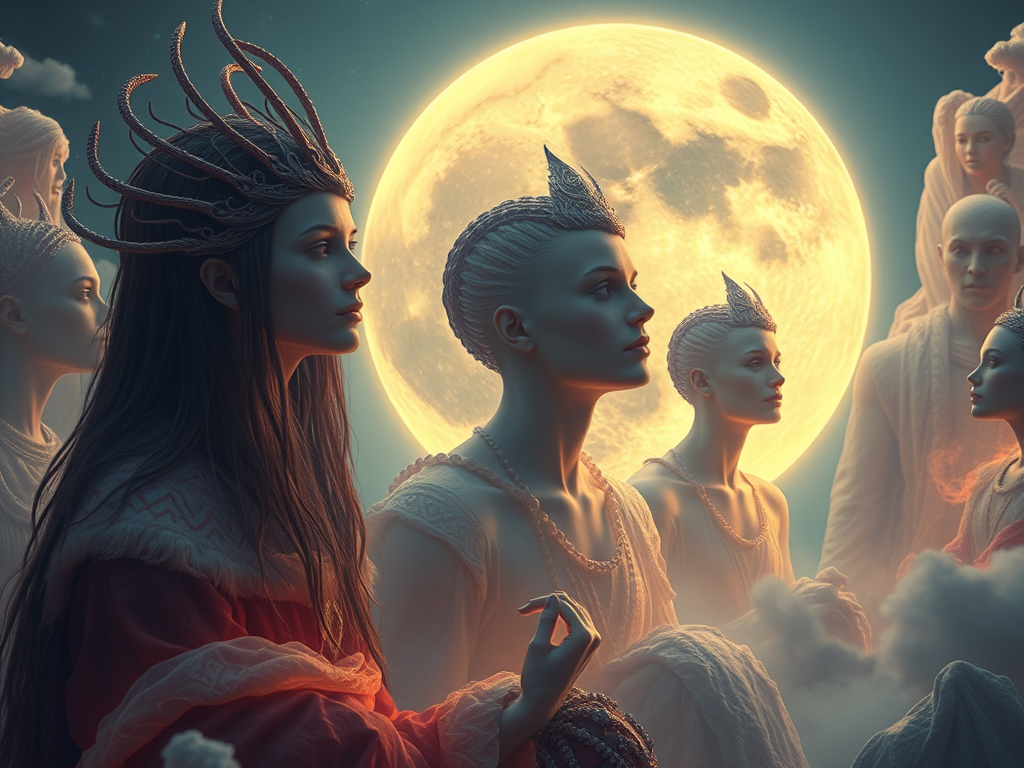
When the Moon slips into Ashlesha, its glow dims—not from absence of light, but from the weight of what lies beneath. Emotions don’t flow here; they twist, tangle, conceal. Ashlesha doesn’t express—it coils. The mind becomes dense, wound tight with impulses and memories too sharp to touch. There’s a cunning to this nakshatra, but it turns inward first, creating an atmosphere where even one’s own intentions feel suspect.
Under this influence, clarity is a mirage. Emotions rise not in waves, but in smoke—intangible, acrid, lingering. Conversations carry double meanings. Intuition sharpens, but not gently—it cuts. The world seems veiled, slightly off-kilter, and the self is no longer a stable ground but a shifting terrain of suspicion and sensitivity. Paranoia doesn’t shout; it whispers.
Physically, the toll is subtle but insistent. A clenched jaw. A restless stomach. A pulse that flickers just beneath awareness. It’s not illness but unease—a signal that the body, like the mind, is on alert. Sleep becomes a battlefield of dreams laced with symbols and buried tensions. The body aches not from exertion, but from holding in too much.
Yet, within Ashlesha lies an ancient power—the power to understand what others avoid. This is the realm of the subconscious, the territory of deep transformation. The venom of Ashlesha can destroy, but it can also heal—if handled with care. This is not the time for forced positivity or surface-level distractions. It’s a time for shadow work, for confronting what has long been coiled and waiting.
In silence, in sacred rituals, in solitude—not loneliness—this nakshatra reveals its medicine. The pain it brings isn’t cruelty; it’s initiation. If one can sit with the discomfort, if one can listen to the silence beneath the noise, Ashlesha offers something rare: the alchemy of self-possession.
 ©NAVAGRA - A FREE VEDIC HOROSCOPE READING PLACE
Leave a comment